




Health & Education
We all want the best care possible for our horses. The Heath & Education section covers both Learning Institutions, Organizations as well as many sources for equine assistance including Veterinarians and Farriers.
For those who want a to formally study horses, the Education section includes College Riding, Equine Studies, and Veterinary Schools. Learn about the wide variety of horses in the Horse Breeds section. Supplements and Treatments Therapy are also included in the section.
Everyone can learn from Fine Art and there are some specialty Museums that might surprise you.
Horses as a therapy partner enrich the lives of the disabled. These facilities are listed in our Therapeutic Riding section. To help children and young adults build confidence and grow emotionally, please see the resources available on the Youth Outreach page.
Looking for a place to keep your horse? You can find it in the Horse Boarding section. Traveling? Find a Shipping company or Horse Sitting service if your horse is staying home!
Want to stay up to date with the latest training clinics or professional conferences? Take a look at our Calendar of Events for Health & Education for the dates and locations of upcoming events.
Do we need to add more? Please use the useful feedback link and let us know!
by Kentucky Equine Research Staff
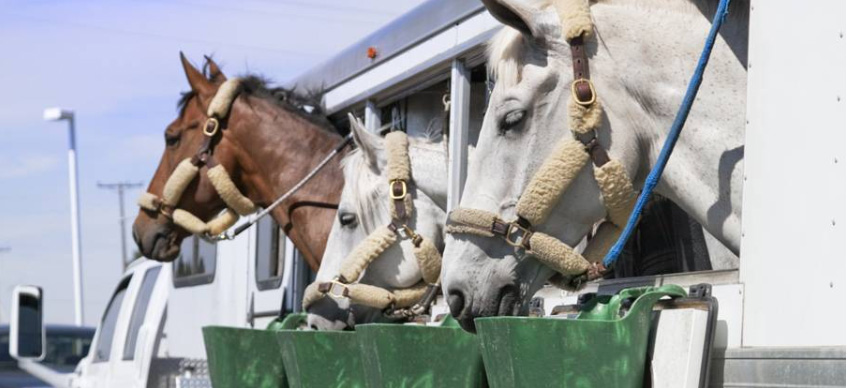
It’s a rare horse that hasn’t been transported at some time in its life. Changing owners, competing in a show, going to a trail ride, working with a trainer, and moving to and from the racetrack are all situations that require the horse to be moved, usually by float or truck but sometimes by airplane.
Most horses learn that being transported is not a big deal, but just because they accept travel with outward calm does not mean they don’t feel stress as a consequence of the experience.
Researchers have identified at least 25 different physical, psychological, and environmental components of travel that can create stress in horses.
Aside from humans, horses are the second most common creatures to be transported by air. During a long flight or extended road trip, a horse can easily lose 5% or more of its body weight. Most gain the weight back quickly if they are allowed to rest, eat, and drink after the trip.
Travel sickness, a respiratory infection, was once quite common in horses that had been transported for more than a few hours. It is less frequently diagnosed now that owners have learned that horses should be allowed to lower their heads as they travel.
This posture allows natural drainage of fluids, dust, and bacteria from the respiratory passages, minimizing the risk of infection. Even if horses travel with their heads unrestricted, they should be watched for signs of respiratory disease for a day or two after arriving at their destination.
Some amount of dehydration is hard to prevent, even if water is offered at intervals. Horses often just won’t drink during transport or at rest stops. If a horse refuses to drink at the beginning of a rest stop, water should continue to be offered at intervals throughout the break.
Bringing water from home and offering it with a flavoring agent such as Drink-Up™ in a familiar bucket may get better results. When horses refuse to drink, it can be very frustrating for owners and can lead to dehydration.
KER Drink-Up is a scientifically formulated, highly palatable blend of ingredients that encourages horses to drink. Field studies have shown that 90% of horses offered Drink Up increased their water intake. Drink-Up includes electrolytes to help further stimulate the thirst response.
Encouraging your horse to drink enough water when traveling, competing, or during an illness is crucial in preventing dehydration and associated effects on the horse. Drink-Up is an essential tool for encouraging your horse to drink to the bottom of the bucket.
At the end of the trip, horses should be unloaded, examined for signs of illness or injury, and then allowed to rest in a stable or paddock for several hours. A half-hour of hand-walking and grazing will help horses stretch and relax before they are put in stables or yards.
Owners should provide plenty of hay and water and should watch for normal intake and also manure production. Grain can be offered after a few hours, with several smaller meals being preferable to large grain feeds. If a horse refuses to eat or drink, doesn’t pass manure within two or three hours, or shows signs of illness or discomfort, a veterinarian should be consulted.
It may take horses several days to regain lost weight and fluids after an extended trip. Signs of illness also might not be seen immediately, so horses should be checked for normal temperature, pulse, and respiration for a day or two following travel.
Reprinted courtesy of Kentucky Equine Research. Kentucky Equine Research is an international equine nutrition, research, and consultation company serving horse owners and the feed industry.
Our goals are to advance the industry's knowledge of equine nutrition and exercise physiology, apply that knowledge to produce healthier, more athletic horses, and support the nutritional care of all horses throughout their lives. Learn more at Kentucky Equine Research.
There a more informative articles in our section on Health & Education. While you're here be sure to visit our Curated Amazon Store.
“In the equine industry, true biosecurity is hard to achieve because horses move around a lot, and many diseases are always present,” says Ontario Veterinary College infectious disease specialist Dr. Scott Weese. “However, it's still important to try to prevent diseases from entering and to have plans in place to manage any outbreaks.”With frequent horse movements, endemic pathogens and emerging diseases, there is a need for improved understanding and motivation to adopt better infection control practices.
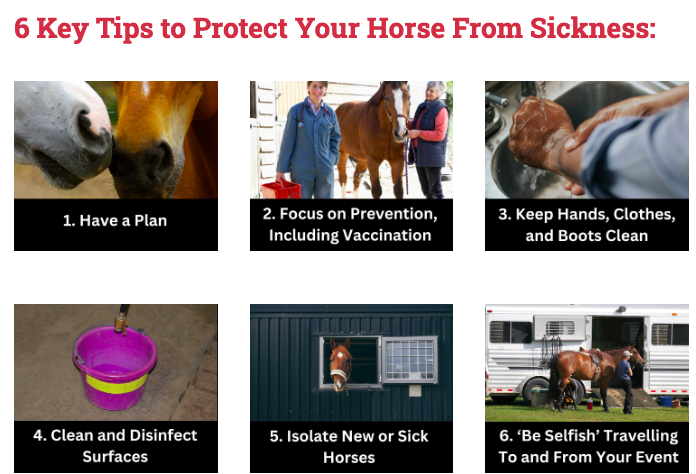
Infection control begins in the barn and works best when the focus is pro-active rather than reactive. This includes having an access management plan, proper quarantine protocols for new and returning horses, and training EVERYONE who comes on to the property or handles the horses.
Access Management
Controlling how horses, humans, equipment and vehicles can move into and around your farm are all aspects of access management aimed to reduce the transmission of pathogens.
Access management begins at the entrance, where a training facility may use fencing and gated entries to restrict access to the stables and training areas, ensuring only authorized personnel can enter. Procedures at controlled access points such as hand sanitizing and boot cleaning help prevent the spread of infections. Both staff and service providers need to be made aware of any infection control measures in place. Clean outerwear that has not been worn to another barn are also recommended to prevent potential spread of disease.
A sign in procedure can be made mandatory for visitors. A log can be helpful to help trace the problem in the event of a disease outbreak. Providing guided tours can ensure they do not enter restricted areas. Additional signage can let visitors know where they can and cannot go.
Controlled access zones can designate specific areas for different activities, such as quarantine zones for new arrivals and separate zones for resident horses, with controlled access points to manage movement.
Isolation/Quarantine
When horses return home or new horses arrive, such as from a sale, it is a good idea to implement quarantine and/or isolation protocols. Ideally this involves housing in a separate building away from your resident horses, but it may be the end of an aisle with several empty stalls in between.
New and returning horses are kept separate and monitored for at least 14 days. This involves twice daily temperature checks and health checks including watching water consumption, appetite, urination, manure and any signs of illness.
Turn out paddocks should also be away from other resident equines, especially if that includes higher risk horses like broodmares and foals.
Effective quarantine includes using separate equipment for isolated or quarantined horses to avoid cross-contamination. This includes water buckets, feed tubs, grooming equipment as well as wheelbarrows, brooms, pitchforks and other cleaning tools.
Ideally, new and returning horses are handled by separate staff. Otherwise, quarantined horses are worked with last & hands are washed before & after each interaction. Strategically placed alcohol-based sanitizers can also be used. If wash stations are limited, this makes it easier for staff and visitors to follow infection control protocols. Disposable gloves, disposable shoe covers & protective clothing are also best practices. Barn cats and other pets should not be allowed to enter the quarantine area.
If you have a number new or returning horses in quarantine and one shows signs of illness, it should be further separated into isolation and seen by a veterinarian ASAP. Horses should remain in isolation until cleared by the vet, as the horse may have recovered from clinical signs but still be infectious. Signage once again should alert unauthorized persons at the entrance of any areas used for isolation or quarantine.
Not Sharing is Caring and Hygiene Practices
Of course, those new or returning horses should be housed in a stall that has been both cleaned and disinfected prior to their arrival.
Cleaning involves removing all visible manure, bedding and soil before washing the area with soap and water and then allowing it to dry. Then apply a disinfectant such as Virkon or other disinfectant recommended by your veterinarian. All disinfectants have strengths and weaknesses and are best used for specific purposes. Bleach has drawbacks as hard water can affect its effectiveness, it can be inactivated by organic material, and it can be irritating to the horse. Steer clear of pressure washers as they can aerosolize certain viruses.
An often-misused step, if you will pardon the pun, is the foot bath. One cannot just walk through without first going through the same routine as mentioned above, both cleaning and disinfecting. First remove debris from the footwear, including the soles using a brush or hose to get all the dirt out of the treads. Immerse the entire bottom of footwear in the disinfectant and scrub. Following the contact time on the product label is important and a dirty footbath does little in the way of boosting biosecurity. Then wash your hands. Other options include dedicated footwear and disposable shoe covers.
Hand hygiene cannot be overstated as one of the most important infection control measures. Best practices on application time for the soap or alcohol-based sanitizer is 20 – 30 seconds.
Everyone knows not to share communal water, but it is also important not to become blasé about biosecurity when it comes to filling or refilling water buckets. Submersing a hose from one bucket to the next or letting it touch the buckets can be a free ride for a pathogen looking for its next host. So instead of multi-tasking while filling buckets, one could be enjoying a beverage with their free hand.
Not sharing should extend beyond grooming equipment to tack, pads, blankets, and of course medical supplies like syringes, needles and dewormers.
More disease prevention measures include minimizing the presence of rodents and insects by keeping feed secure, eliminating standing water and regular removal of manure from stalls and paddocks and as well as management of manure storage areas.
Vaccination
Vaccination is a crucial aspect of equine healthcare, but vaccines do not provide immediate protection; it can take days or weeks for a horse to develop optimal immunity after vaccination, so timing is very important. Planning ahead will allow vaccines to be given well in advance of the next stressor such as travelling or competition.
While no vaccine boasts 100% immunity, horse owners can rest assured that they are taking proactive steps to maintain their horse’s health, minimizing the risk of unexpected veterinary expenses. Vaccines significantly reduce the risk of disease which means if a vaccinated horses does get sick, they will generally experience milder symptoms and recover more quickly.
Working closely with a veterinarian to develop and maintain a vaccination program is an important step for optimal equine health. In addition to core vaccinations, your vet will know what diseases are endemic and emerging in your region or regions you will be travelling to. The frequency of your vaccinations or boosters will depend on a number of factors including special circumstances, such as an extended vector season or even a significant wound if it is incurred over 6 months after a Tetanus shot. The length of your competition season may also necessitate a booster of certain shots to maintain optimal immunity.
Emerging Diseases
Infection control specialist Dr. Weese says, “Understanding potential mechanisms of transmission is the basis of any infection control or biosecurity program.”
Most diseases in horses are caused by pathogens that mainly infect horses. They can spread continuously without needing long-term hosts (like the equine flu virus). They can remain in the horse without causing symptoms for a long time (like Strangles). Some cause infections that can come back at any time (like equine herpesvirus). Others may be part of the normal bacteria in horses but can cause disease if given the chance (like staphylococci and Enterobacteriaceae).
Horses can spread these germs even if they seem healthy, before showing symptoms, after recovering, or as part of their normal bacteria. This makes it hard to identify which horses are infectious. Some symptoms, like fever and diarrhea, strongly suggest an infection, but any horse can potentially spread germs. Therefore, it’s important to have strong infection control practices to manage the risk.
In 2024, the Equine Disease Communication Center (EDCC) reported 577 Alerts for 813 confirmed cases of disease in North America. The most frequently reported disease was Strangles with 186 cases. Because Strangles is not reportable in all states or provinces the disease is likely much more prevalent than reported to the EDCC. Other frequently reported illnesses include: 153 West Nile Virus (WNV), 125 Eastern Equine Encephalitis (EEE), 109 Equine Infectious Anemia, 73 Equine Herpesvirus- Neurologic, 8 Equine Herpesvirus- Respiratory, 34 Equine Influenza.
- Strangles: A bacterial infection caused by Streptococcus equi, leading to swollen lymph nodes and respiratory issues. It is highly contagious and spread through contact. This could be nose-to-nose between horses or via contaminated surfaces or equipment such as: shared halters, lead shanks, cross ties, feed tubs, stall walls, fencing, clothing, hands, the hair coat from other barn pets, grooming tools, water buckets, communal troughs.
After an outbreak, cleaning should involve removal of all organic material from surfaces and subsequent disinfection of water containers, feeders, fences, stalls, tack and trailers. - West Nile Virus (WNV): a mosquito-borne virus leading to neurological issues such as inflammation of the brain and spinal cord. WNV can be fatal and survivors can have residual neurological deficits for a period of months to permanent disability.
- Eastern Equine Encephalitis (EEE): another virus transmitted by mosquitos Eighty to ninety percent of infected horses develop acute and fatal neurologic disease.
- Equine Infectious Anemia (EIA): is a blood-bourne virus which can be transmitted by insects, medical equipment or passed from mare to foal in utero. With no treatment or cure, horses confirmed positive by a Coggins test can be quarantined for the rest of their life but are usually euthanized.
- Equine Herpesvirus (EHV): This virus had multiple strains and can cause both abortion and neurologic symptoms. Spread via aerosol particles from nasal discharge or from contaminated surfaces. There are vaccines for respiratory and abortive strains but not the neurologic form of EHV-1 (EHM).
These diseases highlight the importance of biosecurity and vaccination in managing equine health. Tetanus, Rabies, West Nile Virus and Eastern Equine Encephalitis are core vaccinations recommended by veterinarians.
In February 2025, Equine Guelph partnered with the Equine Disease Communication Center (EDCC), to help horse owners assess and manage infectious disease risks with the relaunch of Equine Guelph’s Biosecurity Risk Calculator (TheHorsePortal.com/BiosecurityTool). The interactive free tool is Equine Guelph’s tool of the month for May, and it is full of useful information from quarantine protocols, best practices for cleaning, and easy to understand practical access management tips. In just 10 minutes, you can assess and minimize biosecurity threats for your barn.
“Applying routine and basic biosecurity is the best way to prevent infectious diseases,” says Dr. Nathaniel White the Director of the EDCC. “This includes isolation of new horses introduced to facilities, monitoring horses’ temperature and preventing horse to horse contact while traveling and keeping vaccinations up to date. Being aware of disease prevalence using information from the EDCC and the updated Biosecurity Risk Calculator” can help owners use management practices to decrease disease risk.”
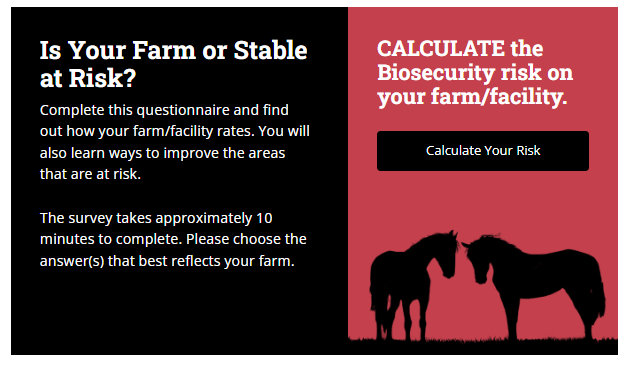
Visit Equine Guelph’s free tool at Biosecurity TheHorsePortal.com/BiosecurityTool
Equine Infection Control Measures During Transport
Pre-transport preparations entail more than just having your paperwork in order.
Taking the time to clean and disinfect the trailer or make sure the trailer you have hired always cleans between loads is of paramount importance. If the trailer smells like horses, it was not adequately cleaned. Perform a horse health check before you leave the property. It is not worth the gamble to stress a horse with travel when it is ‘not-quite right’.
Being particular about your horses traveling companions is just as important as the cleanliness of the trailer. Avoid travelling with horses from other locations as being in close quarters increases the risk of picking up an infectious disease.
Tie the horse loosely if possible. Horses tied short are less ability to lower their head to clear mucus. Allowing freedom of head movement can reduce stress and the bacterial load in the airways. Similarly, hay nets that are hung high, encouraging a high head position, and introducing dust and debris, can challenge mucous clearance.
Ventilation is another important consideration as improving air exchange can reduce the dust and mold spores hanging in the air. Drafts on the other hand can blow particles around in the trailer.
Many prefer shipping in leather halters because they will break in an emergency but there is a biosecurity benefit too as they are easier to clean. Bacteria can linger in the webbing of polyester halters.
Biosecurity is just as important on the road and when visiting other venues. Disease is easily spread through equipment sharing. While visiting venues off the farm be sure to bring your own broom and shovel for cleaning your trailer. Be sure to pack a thermometer along with your tack and other equipment. Clean & disinfect your equipment when you get ready to leave your off-site location.
Upon returning to the home farm, the cycle begins again, monitoring horses for possible delayed onset of symptoms.
To ensure effective infection control, it is crucial to maintain a proactive approach starting right in the barn with a plan. Implementing access management, enforcing proper quarantine protocols for new and returning horses, and thoroughly training everyone who enters the property or handles the horses are essential steps. By taking these practical steps, we can significantly reduce the risk of infections and promote a healthier environment for all.
Bio: Dr. Scott Weese, veterinary internal medicine specialist and the chief of infection control at the University of Guelph’s Ontario Veterinary College.
This article originally appeared on Equine Guelph The University of Ontario, Canada, and is published here with permission.
You can find more informative articles in our section on Health & Education.
- Is Your Horse Happy?
- Setting Up Thoroughbreds for Success One Stride at a Time
- Five Things About Joint Care
- The Efficacy of Sponge Baths and Hosing on Exercise Recovery in Thoroughbred Horses
- Smarter Grazing: How Satellite Technology Supports Sustainable Horse Pasture Management
- Managing Energy and Motivation While Caring for Your Horses
- Five Tips for Hiring a Horse Shipper
- Tall Fescue Toxicity in Mares
- Healthy Joints for Years of Happy Trails
- $20,000 in student scholarships offered by Purina Animal Nutrition
- Saddle Fit Differences Between Men and Women
- Use of Standardized Exercise Tests in Equine Research
- Helping all horses live healthier lives
- 5 Tips For Keeping Aged Horses Fit To Compete
- Fruits are Fabulous, even for Insulin Resistant Horses!
- 12 Tips for Being a Good Member of Your Boarding Barn - an excerpt from "Newcomer to the Horse World"
- $10,000 Equestrian Merit Scholarship
- Non-GMO is NOT Necessarily Safe
- Consider Beet Pulp Instead of Oats
- Five Tips About Dummy Foals