




Health & Education
We all want the best care possible for our horses. The Heath & Education section covers both Learning Institutions, Organizations as well as many sources for equine assistance including Veterinarians and Farriers.
For those who want a to formally study horses, the Education section includes College Riding, Equine Studies, and Veterinary Schools. Learn about the wide variety of horses in the Horse Breeds section. Supplements and Treatments Therapy are also included in the section.
Everyone can learn from Fine Art and there are some specialty Museums that might surprise you.
Horses as a therapy partner enrich the lives of the disabled. These facilities are listed in our Therapeutic Riding section. To help children and young adults build confidence and grow emotionally, please see the resources available on the Youth Outreach page.
Looking for a place to keep your horse? You can find it in the Horse Boarding section. Traveling? Find a Shipping company or Horse Sitting service if your horse is staying home!
Want to stay up to date with the latest training clinics or professional conferences? Take a look at our Calendar of Events for Health & Education for the dates and locations of upcoming events.
Do we need to add more? Please use the useful feedback link and let us know!
Everyone wants stability and control when setting off on an adventure with their four-legged friends. Your season of safe journeys begins with many crucial safety checks. Equine Guelph is excited to announce the next online offering of Horse Trailer Safety, to help you check all the important horse boxes.
Expert instructor, Dr. Rebecca Husted, Course instructor, Technical Large Animal Emergency Rescue specialist and volunteer fire fighter, Husted has responded to countless roadside incidents and instructed others on rescue procedure for horrific accident scenes involving horse trailers. Her expertise will serve course participants well to help them avoid becoming a trailer accident casualty.
“WAY too many private horse owners tell me ‘they didn’t know’ after an incident with their horses and trailer/transport. Hauling horses is a serious responsibility,” says Husted. “Due diligence is required to make sure your set up is safe and emergency preparedness is essential. This course will ensure you know how to effectively check your own rig.”
A quick video with Husted explains the importance of maintaining the flooring in all types of trailers.
Designed to provide horse owners and caretakers with essential knowledge and skills for the safe transportation of their equine companions, the Horse Trailer Safety course is a part of Equine Guelph’s ongoing commitment to equine welfare and education. Participants will gain valuable insights into various aspects of horse trailer safety; from making sure you are set up with the right towing package to pre-trip, post-trip, annual inspections and everything in-between pertaining to emergency preparedness.
“Course content and real-life scenario discussions were nothing short of phenomenal – it really did feel as close to being in a classroom as anything on-line could have. What a fantastic course – so many excellent resources to take away. Course management, instruction, content and pace were just perfect. Fabulous, rare opportunity to have instruction from industry experts Rebecca Husted and Kevan Garecki.” – Betsy Sayers, Handy Horse Docs, Griffith ON – Horse owner
Whether you are looking to purchase a truck and trailer in the near future or want to minimize your risks while driving, this two-week online course will be well worth the investment. Register today at TheHorsePortal.ca for Horse Trailer Safety.
This article originally appeared on Equine Guelph, The University of Guelph and is published here with permission.
You can find more informative articles in our section on Health & Education.
While you're here, find some perfect items for your horse! Visit our curated Amazon Store.
by Kentucky Equine Research Staff
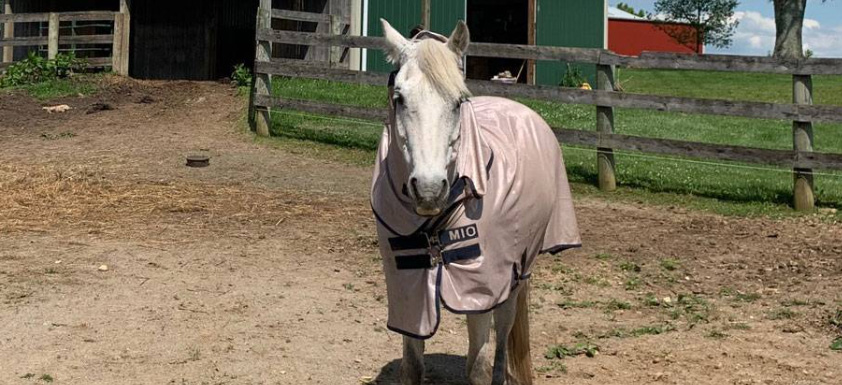
One of the most frustrating insects for horse owners is a midge identified as Culicoides. Tiny and prone to swarming, these midges, sometimes called no-see-ums or punkies, can be relentless in their biting, often leading to persistent skin wounds.
Midges seem to prefer certain regions of the horse, including the mane, tail, and belly. Bites incurred by midges are sufficiently annoying, but the problem extends beyond mere aggravation. Many horses are allergic to the saliva of insects, creating areas of pruritis, or intense itching. Infected horses will use fixed objects such as fence posts, stall walls, or trees to scratch their manes and tails. Clever horses will straddle automatic waterers so they can relieve the discomfort on their bellies.
Aside from extreme itching, clinical signs of Culicoides-associated skin problems include broken hair or patchy hair loss, scaling, or oozing lesions. The lesions are often painful from the onset but become more so as they age. These symptoms are sometimes collectively referred to as sweet itch.
Treatment goals include controlling itchiness, treating secondary bacterial infections, and reducing exposure to midges. Because midges are most active just prior to and at dusk, one approach to reducing exposure would be to bring horses into a stall with a heavy air current, which is possible through the use of fans. Consultation with a veterinarian is always wise when confronted with a skin problem, and many horses with infection will require medication.
From a nutritional perspective, supplementation with omega-3 fatty acids is helpful.
“Many veterinarians and horse owners believe that daily supplementation with an omega-3 supplement helps tremendously with the itchiness and inflammation involved in Culicoides-related skin disease,” said Catherine Whitehouse, M.S., a nutrition advisor with Kentucky Equine Research (KER). “Omega-3s help control body-wide inflammation, and this might be one reason horses find a certain measure of relief when fed long-chain fatty acids.”
Fish oils are direct sources of eicosapentaenoic acid (EPA) and docosahexaenoic acid (DHA), which are the most useful omega-3 fatty acids in terms of conferring health benefits. For optimal omega-3 supplementation, choose a marine-derived product, such as EO-3.
Reprinted courtesy of Kentucky Equine Research. Kentucky Equine Research is an international equine nutrition, research, and consultation company serving horse owners and the feed industry. Our goals are to advance the industry's knowledge of equine nutrition and exercise physiology, apply that knowledge to produce healthier, more athletic horses, and support the nutritional care of all horses throughout their lives. Learn more at Kentucky Equine Research.
There a more informative articles in our section on Health & Education. While you're here be sure to visit our Curated Amazon Store.
- Osteoarthritis Pain in Horses Controlled by CBD and Related Products
- Review of Roaring & Possible New Surgical Procedure
- Encourage Horses to Drink During Transport
- Be Pro-active Rather than Reactive with Biosecurity
- Is Your Horse Happy?
- Setting Up Thoroughbreds for Success One Stride at a Time
- Five Things About Joint Care
- The Efficacy of Sponge Baths and Hosing on Exercise Recovery in Thoroughbred Horses
- Smarter Grazing: How Satellite Technology Supports Sustainable Horse Pasture Management
- Managing Energy and Motivation While Caring for Your Horses
- Five Tips for Hiring a Horse Shipper
- Tall Fescue Toxicity in Mares
- Healthy Joints for Years of Happy Trails
- $20,000 in student scholarships offered by Purina Animal Nutrition
- Saddle Fit Differences Between Men and Women
- Use of Standardized Exercise Tests in Equine Research
- Helping all horses live healthier lives
- 5 Tips For Keeping Aged Horses Fit To Compete
- Fruits are Fabulous, even for Insulin Resistant Horses!
- 12 Tips for Being a Good Member of Your Boarding Barn - an excerpt from "Newcomer to the Horse World"