




Health & Education
We all want the best care possible for our horses. The Heath & Education section covers both Learning Institutions, Organizations as well as many sources for equine assistance including Veterinarians and Farriers.
For those who want a to formally study horses, the Education section includes College Riding, Equine Studies, and Veterinary Schools. Learn about the wide variety of horses in the Horse Breeds section. Supplements and Treatments Therapy are also included in the section.
Everyone can learn from Fine Art and there are some specialty Museums that might surprise you.
Horses as a therapy partner enrich the lives of the disabled. These facilities are listed in our Therapeutic Riding section. To help children and young adults build confidence and grow emotionally, please see the resources available on the Youth Outreach page.
Looking for a place to keep your horse? You can find it in the Horse Boarding section. Traveling? Find a Shipping company or Horse Sitting service if your horse is staying home!
Want to stay up to date with the latest training clinics or professional conferences? Take a look at our Calendar of Events for Health & Education for the dates and locations of upcoming events.
Do we need to add more? Please use the useful feedback link and let us know!
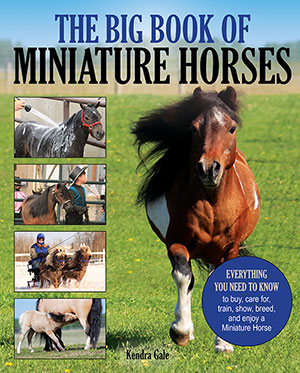
by Kendra Gale
The benefits of interaction with horses are only just beginning to be properly explored, and with their unique small size and very curious personality, Miniature Horses are very well suited to be therapy animals.
Equine Assisted Learning and Equine Assisted Therapy
Using horses as a part of psychotherapy, or to teach life skills, is a rapidly growing modality. Julia Morgan, of Horse Powered Connections, is a certified FEEL practitioner. FEEL stands for Facilitated Equine Experiential Learning, and horses are a very active participant in the process. Using a horse-led series of exercises, equine experiential learning works with the horse’s natural sensitivity to physical movement and emotional states to help people gain self-knowledge and acquire skills leading to personal growth through positive life changes.
Julia’s focus is on children. Her journey began with her own son, who was non-verbal and diagnosed as severely autistic. He is now an outgoing, talkative, and confident little boy, a transformation that Julia credits to the horses and learning to connect with his environment more like a horse would. Julia enjoys working with children and finds a special joy in helping children face the challenges arising from ADD (attention deficit disorders), anxiety, and ASD (autism spectrum disorder). She has seen remarkable changes from children’s interactions with the horses, from a teenage girl with ADHD (attention deficit hyperactivity disorder) who proclaimed that her brain had never been so quiet, to a young autistic boy who was once again excited to go to school and make new friends because he’d been able to make friends with the horse.
Read more: Miniature Horse Therapy: Great Big Good Things in Small Packages
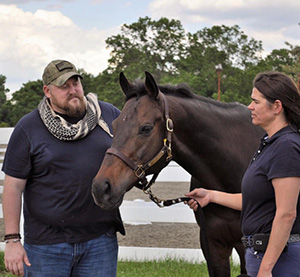
by Dan Ross
How long have humans been aware of the cruel psychological toll of war? For a clue, just turn to the Ancient Greeks, and the play Ajax, about a decorated general whose hellish recollections of battle drive him into deep depression and eventually to suicide.
For millennia then, we have recognized many of the conditions that now fall under the umbrella of Post Traumatic Stress Disorder (PTSD). And yet, beyond a handful of common treatments for PTSD with only so-so success rates, the medical establishment has largely ignored so called “alternative” treatments for which there’s overwhelming anecdotal evidence as to their benefits.
Until now, that is. Columbia University’s ongoing Man O’ War research project, scheduled to wrap this summer, seeks to finally confirm what has also been suspected since the heyday of Greek antiquity: that horses, whose hardwired flight instincts mirror in so many ways the human symptoms of PTSD, have the unique ability to help heal the mental wounds and scars of traumatized veterans.
“Even the best treatment currently is effective for no more than 50 to 60% of patients with PTSD,” said Yuval Neria, professor of medical psychology at Columbia and a co-director of the program. Which is why the patients involved in the Man O’ War Project are “looking for something more promising,” Neria said. “There’s a lot of room for improvement.”
The study aims to standardize the way horses can be used to help veterans with PTSD recover from the horrors of their past by producing a manual that other equine therapy programs–many of which vary in approach–can use as a blueprint to work with and from. And by standardizing and legitimizing equine therapy in this way, it could open the door much wider for more racehorses to be used in such programs once their racing careers end.
Read more: Man O’ War Project Helping the Soldiers of War Heal
- Is Icing Still a Valid Treatment for Injuries?
- Must-Have Secret Training Tools
- My Daughter is My Hero
- Horse Training: 7 Essential Steps for Safely Handling Your Horse's Feet
- Kinesiology Taping for Horses—It’s a Thing!
- AVMA Proposes Elimination Of Farrier Exemption From Veterinary Practice Act
- The Keys to Building Confidence in Your Horse from a Master Liberty Trainer
- What is a Shagya-Arabian?
- New Year’s Resolutions for the Senior Horse Owner
- Understanding Cold-Induced Laminitis
- Keeping Your Horse Calm Naturally During Stall Rest
- How “Let’s Do It!” Can Change Your Horse Business…and Your Horse
- Dr. David Nash and NSF Grant Moves Equine Medicine into the Future, with Wide-Ranging Visions for Human Use, as Well
- Fall Equine Wellness: What Your Horse Needs
- The Effect of Minerals on the Insulin Resistance (IR) Horse
- Hurricane Harvey and Irma Horse Rescues
- Texas’ Horseback Emergency Response Team: Helping Hands and Horse, in the (Literal) Trenches
- What You Need to Know: Equine Leg Bandaging
- Quick Tips: Q&A: Controlling Parasites in Horses
- EIE Exclusive Interview with Heather Kitching of Angrove Stud, UK, Home of the Tobiano Racehorse